CIJ Printers for Curved Packaging in 2026
 Samuel Mcgarrigle : Jul 9, 2026, 9:33:50 AM
Explore how continuous inkjet printers support reliable curved packaging printing, variable data coding and high-speed production lines.
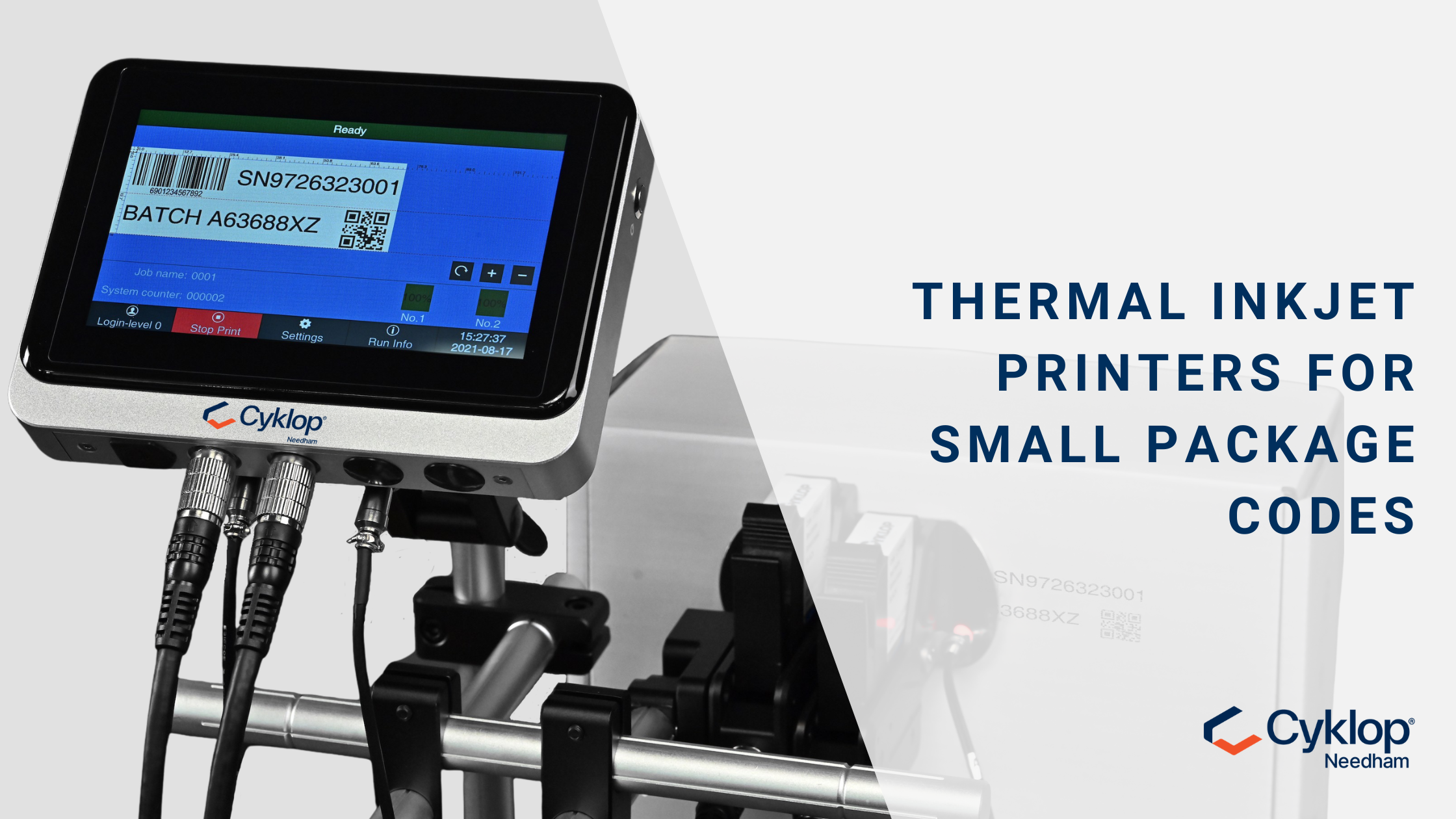
Small package codes may not take up much space, but they carry a lot of responsibility. Batch numbers, expiry dates, lot codes, barcodes, QR codes and product identifiers all help manufacturers maintain traceability, manage stock rotation and meet customer or regulatory requirements.
For packaging manufacturers, the challenge is applying this information clearly and consistently without slowing production. Codes need to be sharp, readable and correctly positioned, even when pack sizes are small and available print areas are limited.
On flat, dry packaging lines, thermal inkjet printers are often one of the cleanest and most precise solutions. They offer high-resolution small character coding without the complexity of larger ink systems, making them a practical choice for many industrial coding and packaging printing applications.
Thermal inkjet printers, often referred to as TIJ printers, are cartridge-based industrial coding systems used to print information directly onto packaging and products.
The technology works by heating tiny amounts of ink inside the cartridge. This creates small ink droplets, which are ejected through the printhead and placed onto the packaging surface. Because the ink and printhead are usually contained within the cartridge, TIJ systems are compact, clean and simple for operators to use.
In packaging environments, thermal inkjet printers are commonly used to print:
This makes TIJ especially useful where manufacturers need clear, high-resolution codes on cartons, cases, sleeves, labels and other flat packaging surfaces.
Small character coding leaves little room for error. A code may only be a few millimetres high, but it still needs to remain readable throughout production, packing, distribution and use.
If a code is unclear, incomplete or badly positioned, it can create wider issues for the production team. A barcode may fail to scan. A batch number may become difficult to read. A date code may smudge before the product reaches secondary packaging.
In high-volume manufacturing, these issues can quickly lead to rejected packs, rework, manual checks and avoidable downtime.
This is why print quality matters. A small code still needs strong contrast, clean edges and consistent placement. For flat, dry packaging lines, thermal inkjet printers can deliver this level of precision when the printer, ink, substrate and line setup are correctly matched.
Thermal inkjet is best suited to applications where the surface is flat, dry and stable as it passes the printhead. This makes it a strong choice for many secondary packaging and carton-based applications.
Typical uses include:
In these applications, TIJ can provide sharp, professional-looking codes without requiring complex fluid management or extensive routine maintenance.
Thermal inkjet printers can produce excellent results, but the packaging surface plays a major role in final print quality.
A flat surface helps keep the printhead at the correct distance from the pack. This is important because TIJ print quality can drop if the printhead is too far away from the substrate. The further the ink droplets travel, the more likely the code is to lose sharpness.
A dry surface is just as important. Moisture, oil, dust or condensation can prevent the ink from drying or adhering correctly. This can lead to smudging, beading, poor contrast or barcode scanning problems.
For production managers and engineers, the key point is that TIJ is not just about the printer. The best results come from matching the printer, ink and packaging material to the real conditions on the line.
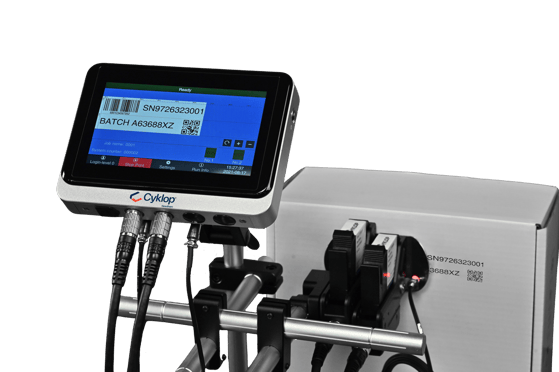
One of the main reasons thermal inkjet printers are popular in packaging printing is their clean operation.
Because TIJ systems use replaceable cartridges, there are no separate ink tanks, make-up fluids or solvent top-ups to manage. This makes the technology simple for operators and helps keep the coding area clean.
This can be particularly useful in industries where cleanliness, quick changeovers and straightforward operation are important, such as:
For manufacturers that want a low-maintenance coding method for flat packaging lines, TIJ can be a practical and efficient choice.
Barcodes and QR codes are one of the strongest use cases for thermal inkjet printers. These codes require sharp edges, accurate spacing and strong contrast to scan reliably.
TIJ printers are capable of high-resolution output, which makes them well suited to machine-readable codes when the setup is correct. However, successful barcode printing still depends on the full application.
Production teams should consider:
A barcode may look clear to the eye but still fail if the printed structure is not accurate enough for the scanner. For this reason, barcode testing should be carried out under real production conditions before a coding setup is approved.
Thermal inkjet printers and CIJ printers are both used across industrial coding, but they are not designed for exactly the same applications.
TIJ is often the better choice for flat, dry surfaces where high-resolution print quality is the priority. It works well for cartons, cases, labels, sleeves and other stable packaging formats.
CIJ printers are often better suited to curved, moving or more varied packaging surfaces. They are commonly used on bottles, cans, jars, tubes, films and other primary packaging applications where line speed, substrate flexibility and non-contact printing are important.
| Requirement | Thermal inkjet printers | CIJ printers |
|---|---|---|
| Best suited for | Flat, dry packaging | Curved, moving or varied packaging |
| Common uses | Cartons, cases, labels, sleeves | Bottles, cans, jars, tubes, films |
| Print style | High-resolution codes, text, barcodes and logos | Small character coding at production-line speeds |
| Ink system | Cartridge-based | Ink and make-up fluid system |
| Maintenance | Low maintenance and clean operation | More involved fluid system maintenance |
| Main strength | Precision and simplicity | Speed and flexibility |
In many packaging facilities, TIJ and CIJ printers are used alongside each other. TIJ may be used for secondary packaging, while CIJ may be used for primary packaging or curved products.
Choosing the right thermal inkjet printer starts with the application. The printer should be selected based on the substrate, code size, production speed and level of print quality required.
Useful questions include:
These questions help determine whether TIJ is the right fit, and which ink or cartridge type is most suitable.
The ink used in a thermal inkjet printer has a direct impact on code quality. A printer can only deliver reliable results if the ink is suitable for the packaging surface.
For porous materials such as uncoated cardboard and paper-based packaging, water-based inks may be suitable. For coated cartons, glossy materials, plastics and other non-porous surfaces, a solvent-based TIJ ink may be required to improve drying and adhesion.
When selecting ink, production teams should consider:
For small package codes, the objective is not only to make the code visible. The code needs to remain clear, correctly positioned and readable throughout the product’s journey.
When thermal inkjet printers are not correctly matched to the application, several print quality issues can occur.
Common problems include:
Most of these issues can usually be traced back to a few causes: unsuitable ink, excessive printhead distance, dirty packaging, incorrect settings, cartridge condition, line speed or insufficient drying time.
If small package codes are not printing correctly, production teams should work through the full application rather than assuming the printer is at fault.
A practical troubleshooting process includes:
This approach helps identify whether the issue is caused by the printer, ink, substrate or production setup.
Thermal inkjet printers are highly effective for the right applications, but they are not suitable for every packaging line.
If the surface is highly curved, wet, uneven, dusty or moving at very high speed, another coding method may be more appropriate. CIJ printers may be a better fit for bottles, cans, jars, tubes and fast primary packaging lines. Laser coding may be suitable where a permanent mark is required and the substrate responds well to laser marking.
The best choice depends on the real production conditions. A flat carton line and a high-speed beverage line have very different coding requirements.
Yes. Thermal inkjet printers are suitable for small package codes when the packaging surface is flat, dry and stable. They can produce sharp, high-resolution text, barcodes, QR codes, batch numbers and expiry dates with clean cartridge-based operation.
Thermal inkjet printers offer a clean, precise and practical solution for small character coding on flat, dry packaging lines. Their high-resolution output makes them well suited to batch numbers, expiry dates, barcodes, QR codes and other variable data, while their cartridge-based design helps keep operation simple and low maintenance.
For packaging manufacturers, TIJ can support efficient industrial coding by delivering clear, consistent codes without adding unnecessary complexity to the line.
However, the best results depend on the full application. The printer, ink, packaging material, printhead position and line conditions all need to work together. For flat cartons, labels, sleeves and secondary packaging, TIJ is often an excellent choice. For curved, wet or high-speed primary packaging, CIJ printers or other industrial coding technologies may be more suitable.
Need support choosing the right printer for packaging?
Needham Ink can help assess your substrate, code requirements, line speed and production environment to recommend the right industrial coding solution for your application.
Thermal inkjet printers are used for industrial coding applications such as batch numbers, expiry dates, lot codes, barcodes, QR codes, logos and product identification marks.
Yes. Thermal inkjet printers are suitable for small character coding because they can produce sharp, high-resolution text and machine-readable codes on suitable packaging surfaces.
TIJ printers are commonly used on cartons, cases, sleeves, labels, trays and other flat packaging materials. The best results are usually achieved on clean, dry and stable surfaces.
TIJ printers are often better for high-resolution printing on flat, dry packaging. CIJ printers are often better for curved surfaces, high-speed primary packaging and more varied production environments.
Yes. Thermal inkjet printers can print barcodes and QR codes, provided the ink, substrate, printhead distance and print settings are correctly matched.
TIJ codes may smudge if the ink is not suitable for the substrate, if the surface is wet or contaminated, or if the code is handled before the ink has dried properly.
Choose a packaging printer by assessing the substrate, code size, line speed, print area, surface condition, drying time, scan requirements and maintenance expectations.

Visit www.needham-ink.com or contact enquiries@needham-ink.com to learn more.
 Samuel Mcgarrigle : Jul 9, 2026, 9:33:50 AM
Explore how continuous inkjet printers support reliable curved packaging printing, variable data coding and high-speed production lines.
 Samuel Mcgarrigle : Feb 7, 2024, 8:56:39 AM
Discover the power of printed 2D barcodes with CIJ printers. Enable smarter data capture, better packaging and real-time engagement with Cyklop...
 Samuel Mcgarrigle : Oct 25, 2023, 2:04:33 PM
Why date and code printing matters in food packaging. Stay compliant and build trust with CM600 & CM700 printers from Cyklop Needham.