CIJ Printers for Curved Packaging in 2026
Curved packaging is now a standard part of modern production. From drinks bottles and aluminium cans to cosmetic tubes, jars, caps and flexible containers, manufacturers are increasingly working with packaging formats that are not flat, simple or easy to mark.
For production managers and engineers, this creates a clear coding challenge. Variable information such as batch numbers, expiry dates, lot codes and traceability marks must be printed clearly and consistently, even when the product is moving at speed and the surface is curved, reflective, wet or difficult to position.
This is where continuous inkjet printers remain one of the most reliable options for industrial coding and marking. In 2026, as manufacturers continue to focus on uptime, traceability and packaging line efficiency, CIJ printer technology remains highly relevant for curved packaging printing across food, beverage, pharmaceutical, cosmetic and wider FMCG production environments.
Why curved packaging is difficult to code
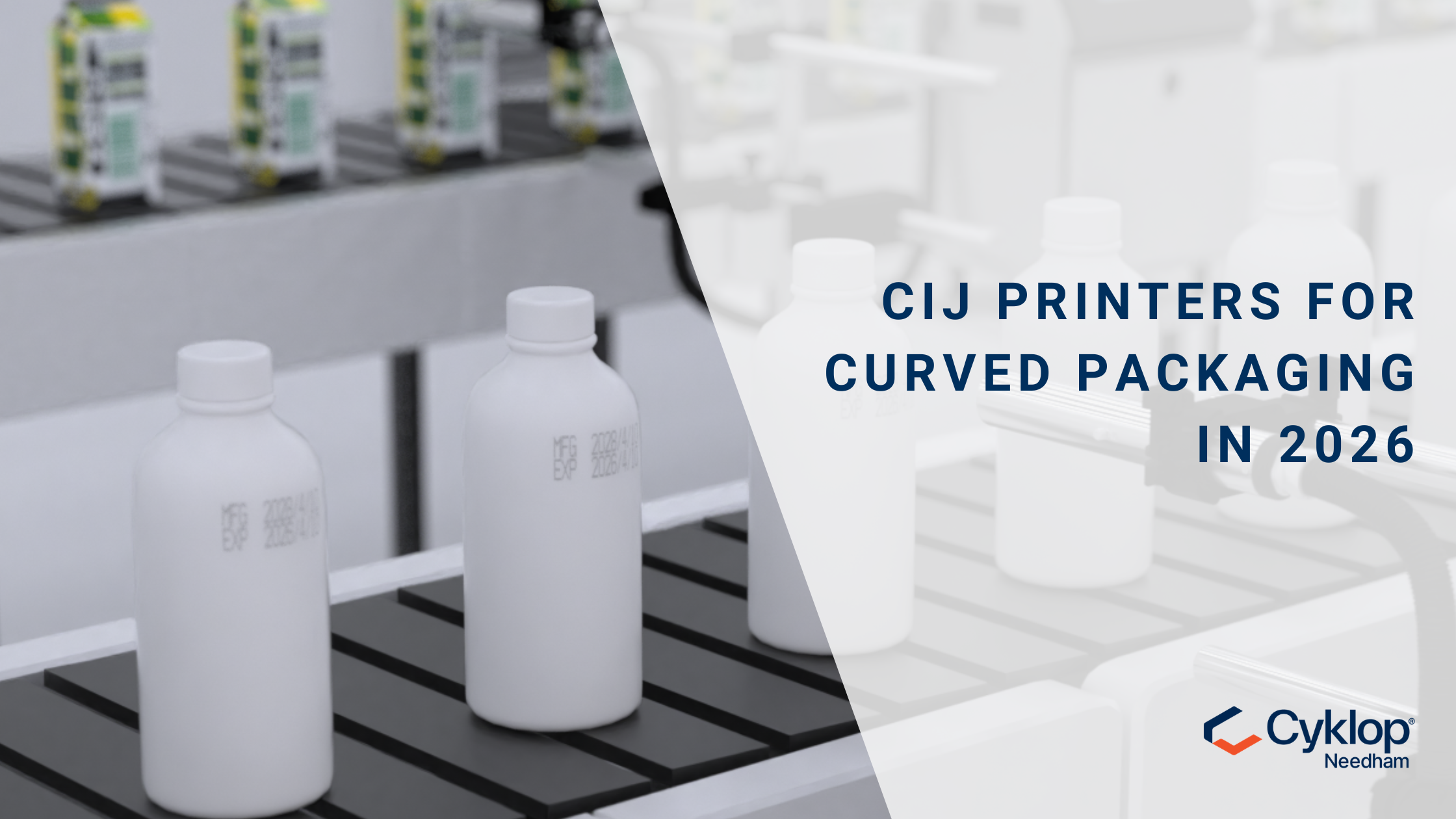
Printing onto a flat carton or label is relatively straightforward. Curved packaging is different. A bottle, can, tube or jar presents a surface that changes angle as it moves past the printhead. This can make code placement, readability and consistency harder to control.
The challenge becomes even greater on high-speed production lines. Products may be moving continuously, with limited space for printer installation and very little tolerance for coding errors. In some applications, packaging may also be cold, damp, glossy, flexible or exposed to handling almost immediately after printing.
Common curved packaging formats include:
- Plastic bottles
- Glass bottles
- Aluminium cans
- Aerosol cans
- Cosmetic tubes
- Food jars
- Dairy pots
- Bottle caps
- Flexible pouches
- Shrink-wrapped packs
Each of these formats can require a slightly different approach. A PET bottle may need fast-drying ink with strong adhesion. A metal can may require clear contrast on a reflective surface. A tube or small container may need a compact code printed into a limited area.
For packaging manufacturers, the goal is not simply to print a code. The goal is to apply accurate, legible variable data without slowing the line, increasing rejects or creating additional operator intervention.
What are continuous inkjet printers?
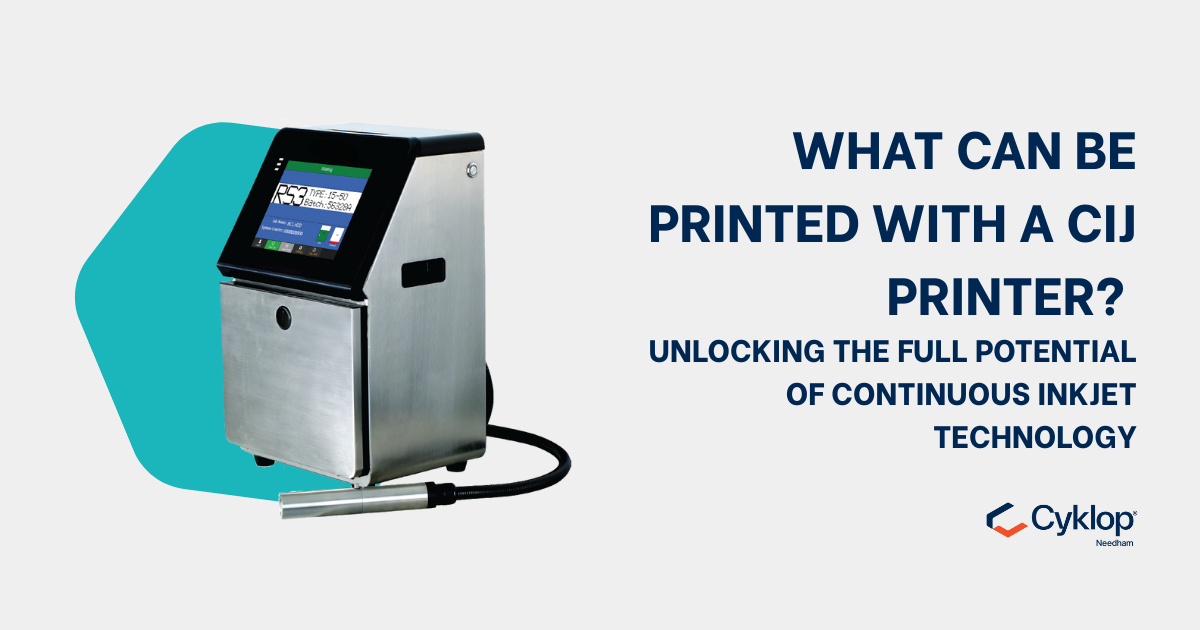
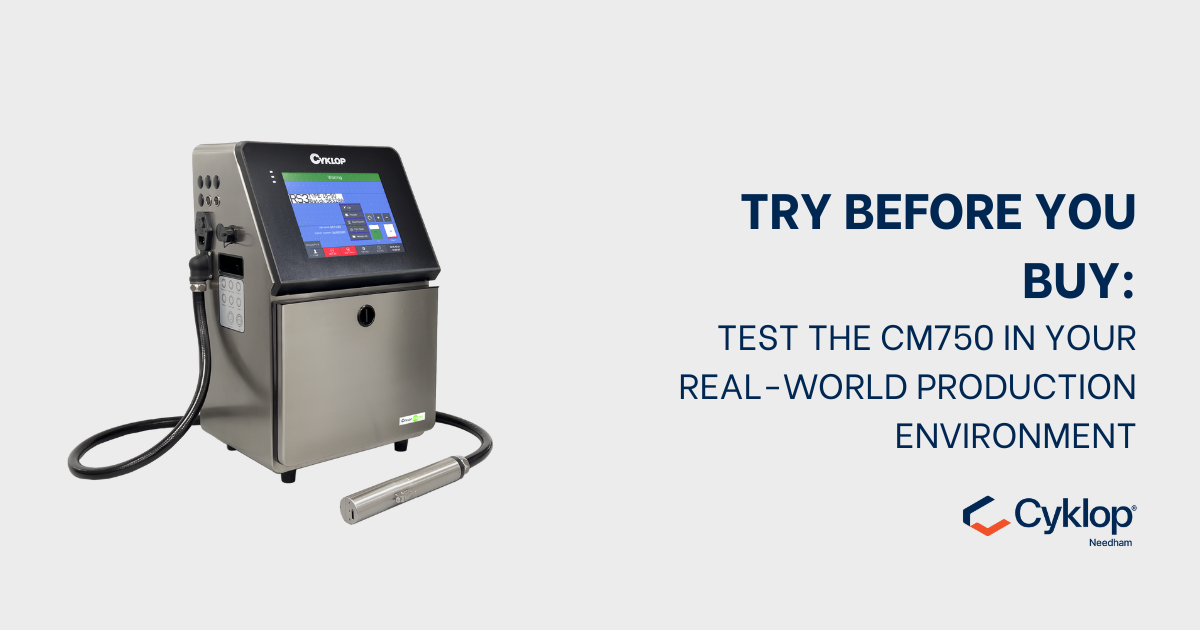
Continuous inkjet printers are industrial printing systems used to apply variable data directly onto products and packaging. They are commonly used for expiry dates, batch codes, lot numbers, production times, traceability information and simple product identification marks.
CIJ printer technology works using a non-contact process. The printer creates a continuous stream of tiny ink droplets, which are then directed onto the packaging surface. Because the printhead does not need to touch the product, continuous inkjet printers can code onto moving, curved, uneven or delicate surfaces.
This makes CIJ especially useful in manufacturing environments where products are moving at production-line speeds and where packaging shapes or substrates vary across different production runs.
Why CIJ printer technology works well on curved packaging
The key advantage of CIJ printer technology for curved packaging is non-contact printing. The printhead can be positioned close to the product, while the ink droplets are projected onto the surface without physical contact.
This allows CIJ systems to print onto round, angled or shaped packaging without the same limitations as contact-based marking methods. It also helps reduce the risk of damaging delicate packaging or interrupting product movement.
For production managers and engineers, this flexibility is valuable because packaging lines rarely stay the same for long. A manufacturer may run bottles on one line, tubs on another and shrink-wrapped multipacks elsewhere. The ability to code a wide range of surfaces with one proven technology can help simplify production and reduce the need for multiple marking systems.
Variable data printing on curved packaging
Variable data printing is one of the most important requirements in modern packaging. Every product needs accurate information that can support traceability, stock rotation, quality control and customer communication.
On curved packaging, continuous inkjet printers are commonly used to print:
- Best-before dates
- Use-by dates
- Batch numbers
- Lot codes
- Production times
- Line identification
- Product references
- Traceability marks
- Simple barcodes
- Promotional codes
This information may be small, but it plays a critical role in the production process. If a code is missing, unclear or poorly positioned, the product may need to be rejected, reworked or investigated. In high-volume manufacturing, even a small coding issue can quickly become a wider production problem.
Reliable variable data printing helps prevent this by ensuring that each product leaves the line with the correct information clearly applied.
The importance of high-speed printing
Curved packaging is often used in high-throughput sectors such as beverage, food, personal care and pharmaceuticals. These environments depend on speed, consistency and uptime.
A coding system that cannot keep up with the line can become a bottleneck. Equally, a system that requires frequent adjustment, cleaning or operator intervention can reduce packaging line efficiency.
Continuous inkjet printers are widely used in these environments because they are designed for industrial production speeds. They can apply codes while products move along the line, helping manufacturers maintain throughput while still meeting coding and traceability requirements.
In practice, this means production teams can code products without needing to stop, label manually or add unnecessary handling stages. For fast-moving packaging lines, that can make a significant difference to overall efficiency.
.png?width=400&height=397&name=image%20(21).png)
CIJ printers in beverage packaging
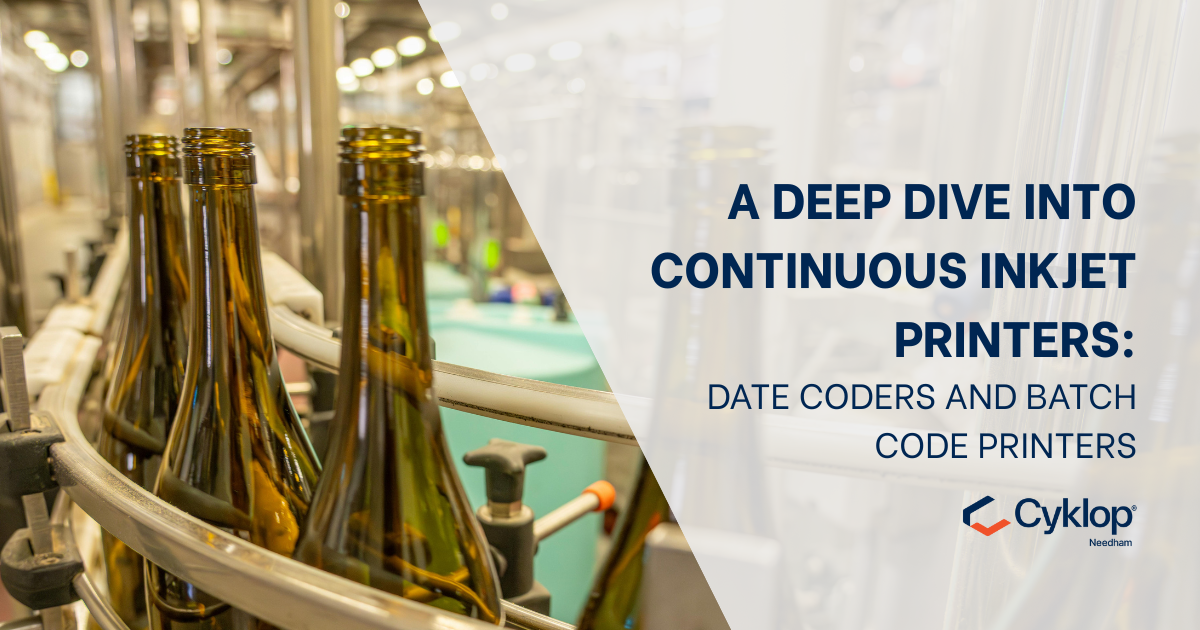
Beverage packaging is one of the clearest examples of where CIJ printers are useful for curved surfaces. Bottles, cans and caps all need reliable coding, often at very high speeds.
A beverage line may need to code onto:
- PET bottles
- Glass bottles
- Aluminium cans
- Bottle caps
- Sleeves
- Labels
- Shrink wrap
- Trays
- Outer cartons
These applications can be demanding. Products may be cold or wet. Surfaces may be curved or reflective. Codes may need to dry quickly before products are packed, handled or palletised.
For this reason, beverage manufacturers need more than a printer that can simply apply ink. They need a complete coding setup that includes the right CIJ printer, suitable ink, correct printhead positioning and reliable integration into the packaging line.
Substrate flexibility across packaging lines
One of the main reasons continuous inkjet printers remain popular is their flexibility across different packaging substrates. A single production site may need to print onto plastic, glass, metal, card, coated materials, flexible film and shrink wrap.
This is important because packaging manufacturers are often working with multiple customers, product formats and packaging specifications. The coding system needs to adapt without creating unnecessary complexity.
CIJ printers can be paired with different ink formulations depending on the surface and production environment. This helps support adhesion, drying time, contrast and code durability across a wide range of materials.
For engineers, this makes application testing essential. The printer, ink and substrate need to be assessed together to make sure the final code performs correctly in real production conditions.
How CIJ printers support packaging line efficiency
Packaging line efficiency is not only about speed. It is about maintaining consistent output with minimal disruption, waste and rework.
A well-specified CIJ printer can support efficiency by helping to:
- Apply codes at production-line speeds
- Reduce manual marking or labelling
- Improve code consistency
- Minimise rejected products caused by poor coding
- Support fast product changeovers
- Print directly onto multiple packaging formats
- Maintain traceability across production runs
- Integrate with existing line equipment
For production managers, the benefit is practical. A reliable coding system reduces the chance that printing becomes the reason a line slows down, stops or produces avoidable waste.
Choosing a CIJ printer for curved packaging
Selecting the right continuous inkjet printer for curved packaging should start with the application, not the machine specification alone.
Production teams should consider:
- The shape of the packaging
- The material being printed
- The speed of the line
- The available print area
- The number of lines of text required
- The required code height
- The level of contrast needed
- The drying time required
- The production environment
- Cleaning or washdown requirements
- Maintenance expectations
- Operator usability
- Integration with existing equipment
A curved PET bottle on a beverage line will not have the same requirements as a cosmetic tube, a food jar or a metal can. The correct solution depends on how the product behaves on the line and what the code needs to achieve after it has been printed.
CIJ compared with other coding methods
Continuous inkjet is not the only option for curved packaging printing. Technologies such as thermal inkjet, laser coding, labelling and thermal transfer all have their place. However, CIJ is often selected when manufacturers need a combination of speed, flexibility and non-contact printing.
Thermal inkjet can be excellent for high-resolution printing, particularly on cartons and porous materials, but may not always be the best fit for every curved primary packaging application.
Laser coding can provide permanent marks and removes the need for ink consumables, but it requires careful substrate testing and typically involves a higher initial investment.
Labels can carry large amounts of information, but they introduce additional materials, application steps and potential points of failure.
For many curved packaging applications, CIJ offers a practical balance. It can print variable data directly onto the product, work at high speeds and adapt to a wide range of packaging materials.
What production teams should look for in 2026
In 2026, packaging manufacturers are under pressure to improve efficiency, reduce waste and maintain reliable traceability. Coding and marking equipment plays a direct role in all three.
When reviewing industrial printing equipment for curved packaging, production teams should ask:
- Can the printer keep up with the actual line speed?
- Can it print clearly on the curved surface?
- Is the ink suitable for the substrate?
- Will the code remain readable after handling?
- How quickly does the ink dry?
- How easy is the system for operators to use?
- What maintenance does the printer require?
- Can the printer support future coding requirements?
- Is technical support available?
- Can the supplier test the application before installation?
The best choice is usually not the printer with the longest feature list. It is the solution that performs reliably on the real line, with the real packaging, at the real production speed.
Quick answer: are CIJ printers suitable for curved packaging?
Yes. Continuous inkjet printers are highly suitable for curved packaging because they use non-contact printing technology. This allows them to apply variable data such as batch codes, expiry dates and traceability marks onto bottles, cans, tubes, jars, caps and other curved surfaces at production-line speeds.
Conclusion
Curved packaging creates a genuine challenge for production teams. Codes need to be accurate, readable and durable, even when products are moving quickly and surfaces are rounded, reflective, flexible or difficult to position.
Continuous inkjet printers remain one of the most effective solutions for these conditions. Their non-contact operation, high-speed performance and substrate flexibility make them well suited to curved packaging printing across a wide range of manufacturing environments.
For packaging manufacturers in 2026, the right CIJ printer can help improve coding reliability, protect packaging line efficiency and support consistent variable data printing across bottles, cans, jars, tubes, caps and other curved packaging formats.
Need support choosing the right continuous inkjet printer for your packaging line?
Needham Ink can help assess your substrate, line speed, coding requirements and production environment to recommend a CIJ solution built around speed, reliability and uptime.
FAQs
What are continuous inkjet printers used for?
Continuous inkjet printers are used for industrial coding and marking applications, including expiry dates, batch numbers, lot codes, traceability information and product identification marks.
Can continuous inkjet printers print on curved packaging?
Yes. Continuous inkjet printers can print on curved packaging because they use non-contact technology. This allows them to code bottles, cans, tubes, jars, caps and other shaped surfaces without touching the product.
What is curved packaging printing?
Curved packaging printing is the process of applying codes or marks to rounded or shaped packaging surfaces, such as bottles, cans, jars, tubes, containers and caps.
What variable data can CIJ printers print?
CIJ printers can print variable data such as batch numbers, expiry dates, lot codes, production times, product references, traceability marks and simple barcodes.
Are CIJ printers suitable for beverage packaging?
Yes. CIJ printers are commonly used in beverage packaging because they can print at high speed on bottles, cans, caps, sleeves, shrink wrap and outer packaging.
Why is non-contact printing useful for curved packaging?
Non-contact printing is useful because the printhead does not need to touch the packaging surface. This makes it easier to code curved, moving, delicate or uneven products.
How do I choose the right CIJ printer for curved packaging?
The right CIJ printer depends on the packaging shape, substrate, line speed, print area, code requirements, production environment and ink performance needed. Application testing is recommended before installation.

Speak to Needham Ink about UV Dot Ink samples, compatibility and pricing.
Visit www.needham-ink.com or contact enquiries@needham-ink.com to learn more.
 Samuel Mcgarrigle : Sep 6, 2023, 11:35:58 AM