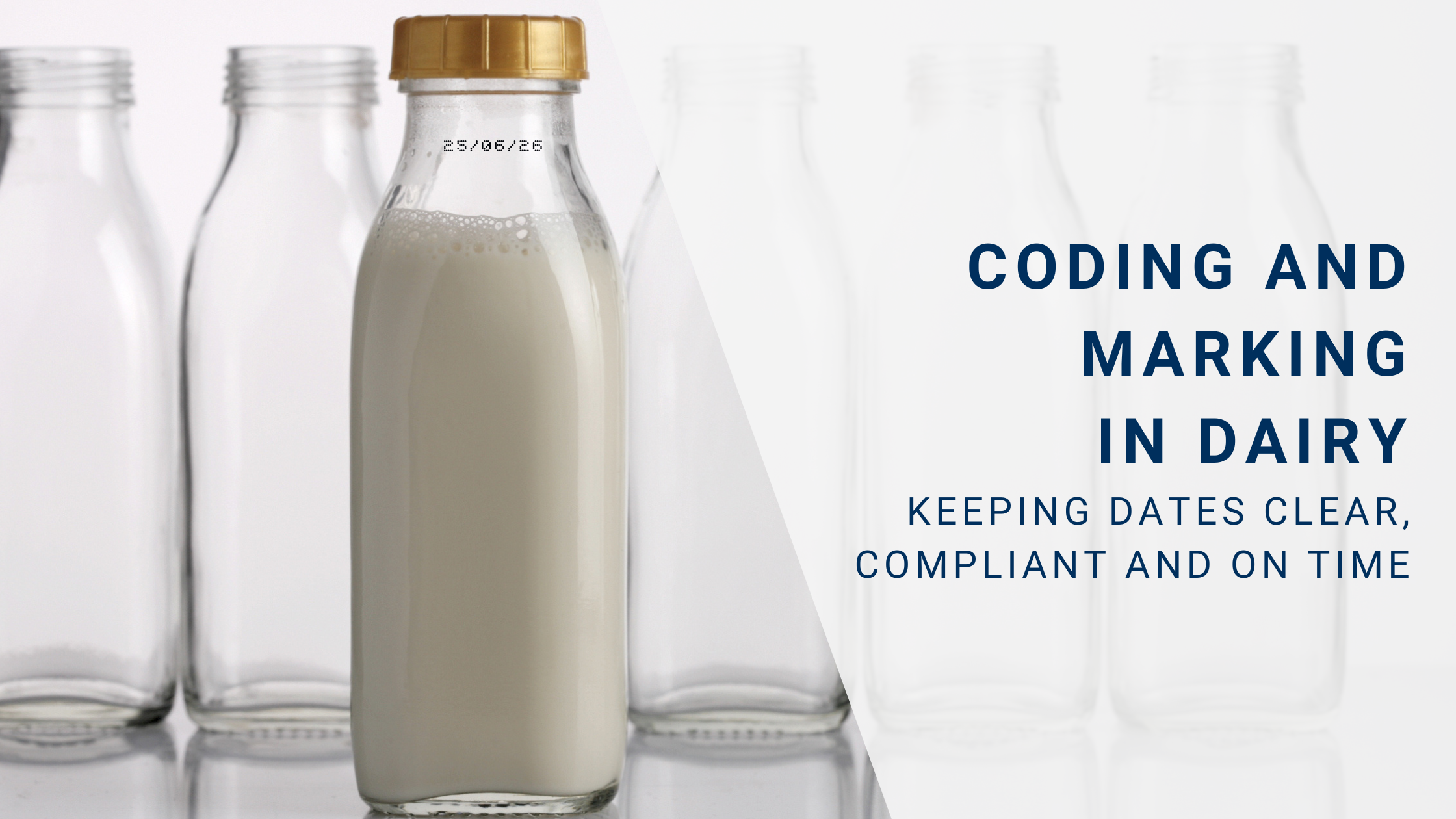
In dairy production, coding and marking sit at the center of food safety and operational control.
Every product leaving the line must carry clear, accurate information that remains legible through filling, chilling, transport and retail handling. When codes fail, the consequences show up quickly in wasted product, rejected deliveries and increased recall risk.
This article explains how coding and marking work in dairy environments, why failures are common and how producers choose technologies that hold up under real production conditions.
Why coding matters in the dairy industry
Dairy products move through the supply chain quickly and operate within tight shelf-life limits.
Use-by dates, batch numbers and traceability codes must stay readable from the moment they are applied to the point of consumption.
Strong coding systems help dairy producers meet regulatory requirements, support full traceability during audits or recalls and reduce the risk of stock rejection by retailers. Clear, consistent codes also protect brand trust, since poor coding is immediately visible to consumers at shelf.
The reality of dairy production environments
Dairy plants place heavy demands on coding equipment. Production often takes place in chilled rooms where condensation forms on packaging and equipment surfaces. Regular washdowns introduce moisture, cleaning chemicals and pressure that challenge electronics and print quality.
At the same time, dairy lines typically run at high speed with little tolerance for downtime. Dates change daily, pack formats vary by customer and operators must handle frequent changeovers without slowing output. Add bottles, cartons, films & labels to the mix and it becomes clear why coding failures are common without the right setup.
Coding technologies used in dairy production
There is no single coding technology that fits every dairy application. Most producers use a mix of systems across different lines, chosen based on environment, packaging and performance needs.
The most common technologies in dairy are continuous inkjet, thermal inkjet and laser coding. Each has strengths and limits that matter in daily operation.
Continuous inkjet coding in dairy
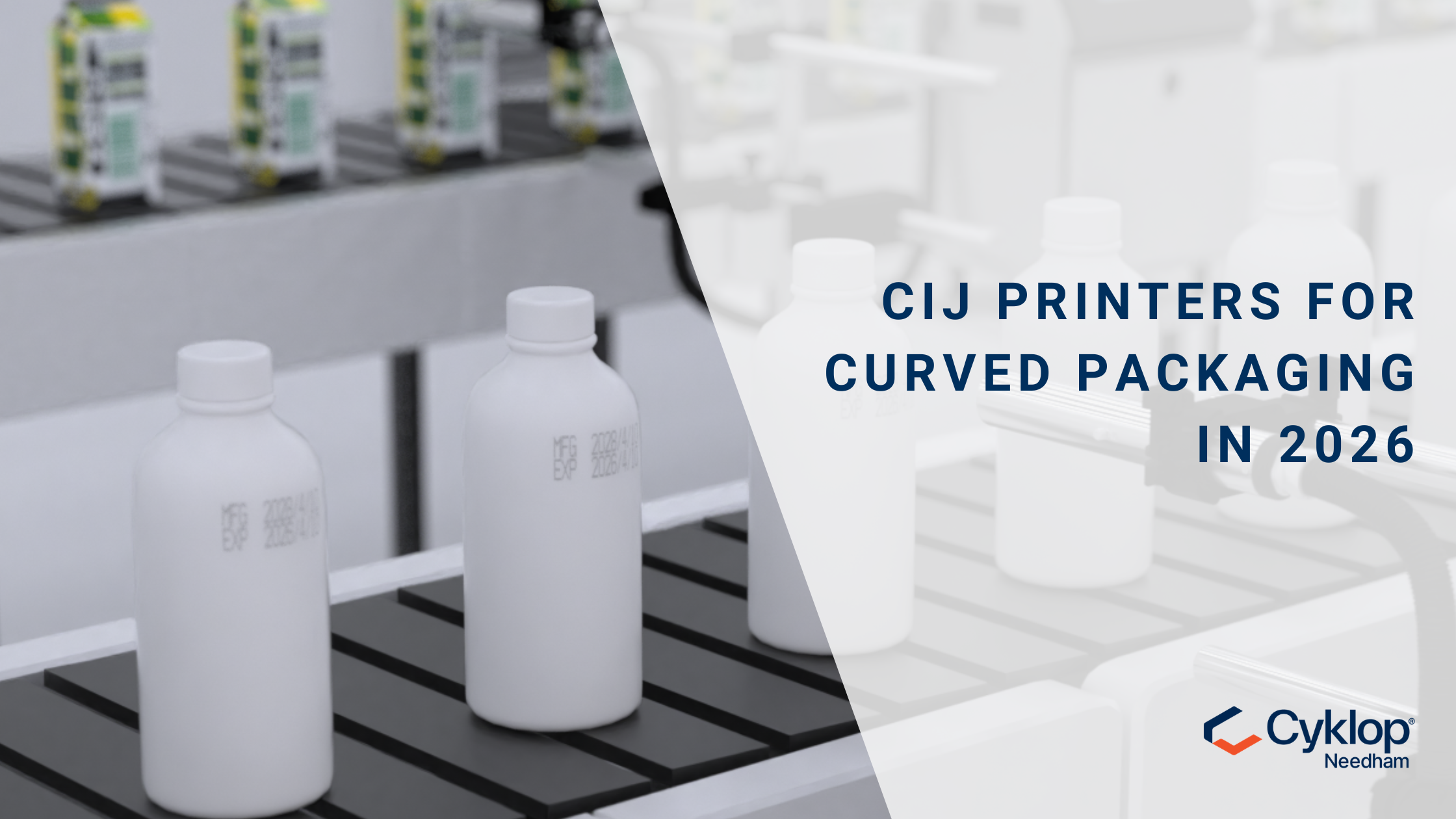
Continuous inkjet, or CIJ, remains the most widely used coding method in the dairy industry. It is designed to operate reliably in cold, wet and high-speed environments where other technologies struggle.
CIJ prints without contact, which allows clear codes on moving products and uneven or curved surfaces. It is commonly used on milk bottles, yogurt tubs, caps, lidding film and secondary packaging.
Its flexibility, fast print speeds and tolerance for moisture make it a dependable choice for most dairy lines. With the right food-grade or washable inks, CIJ supports hygiene standards while keeping maintenance predictable.
Thermal inkjet coding in dairy applications
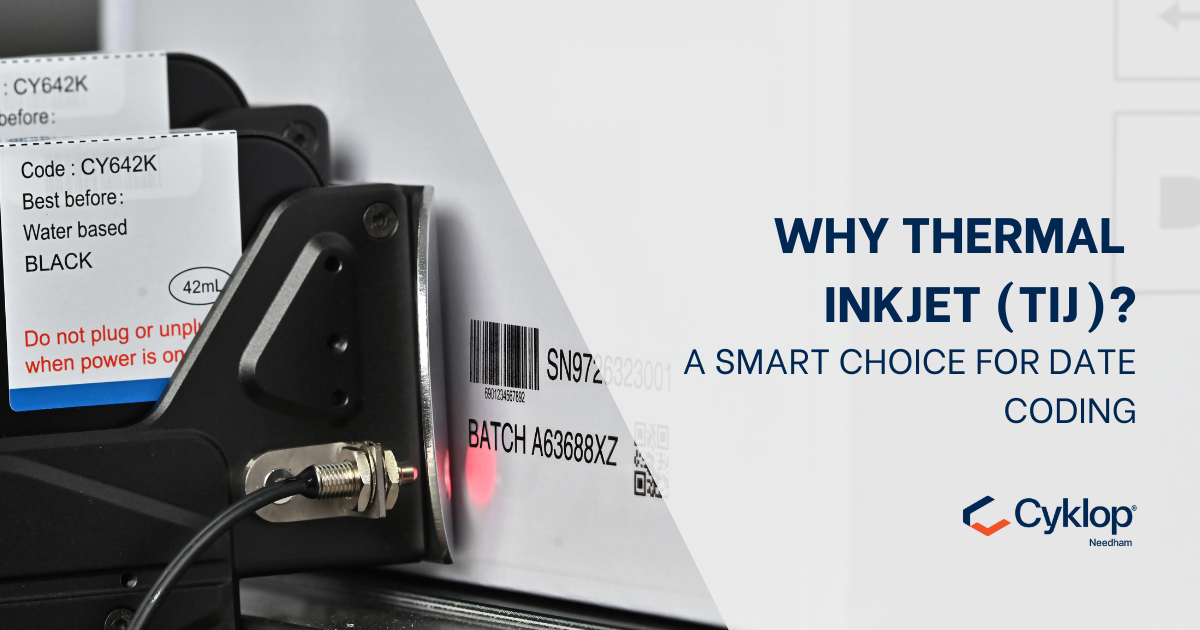
Thermal inkjet, or TIJ, is chosen when code clarity and resolution take priority. It produces sharp, high-contrast text and graphics that work well on flat, dry surfaces.
TIJ is often used on cartons, labels and flat films in controlled areas of dairy plants. Operators value its clean operation and straightforward cartridge replacement, which reduce handling and training time.
While TIJ performs well in clean environments, it is less suited to areas with heavy condensation or direct washdown. Understanding where it fits is key to long-term reliability.
Laser coding for dairy packaging
Laser coding marks packaging by altering the surface rather than applying ink. This creates permanent, durable codes without fluids or consumables.
Dairy producers often choose laser systems for high-volume lines where long-term running costs matter. Laser coding delivers consistent results at speed and requires minimal day-to-day intervention.
It works well on coated cartons, some films and selected plastics, usually within enclosed and controlled setups. Where permanence and low consumable use are priorities, laser coding becomes a strong option.
How dairy producers choose the right coding technology
Choosing the right coding solution starts with understanding the production environment. Cold, wet or washdown areas usually point toward CIJ, while clean and dry zones allow more flexibility with TIJ or laser.
Packaging type also plays a major role. Curved bottles and flexible films suit CIJ, while flat cartons and labels are better suited to TIJ or laser systems. Line speed, code durability and integration needs further narrow the choice. Many dairy sites run different technologies across lines to match these factors rather than forcing one solution everywhere.
Hygiene, compliance and audit readiness
Coding equipment must support dairy hygiene standards rather than complicate them. IP-rated enclosures help protect printers during washdowns, while smooth surfaces reduce residue build-up.
Clear documentation and controlled handling procedures support HACCP plans and simplify audits.
When coding systems are designed with hygiene in mind, they become easier to manage and easier to defend during inspections.
Why trials matter in dairy coding decisions
Testing coding equipment on the actual production line removes uncertainty. A trial shows how a system handles cold temperatures, moisture and real line speeds.
It also reveals how easy daily changeovers are and whether codes remain clear on real packaging. For dairy producers, trials reduce risk and support confident purchasing decisions.
Final Thoughts
Coding and marking are fundamental to dairy production, not an afterthought. They support food safety, compliance and brand trust on every pack that leaves the line.
Continuous inkjet remains the core technology for most dairy environments, while thermal inkjet and laser add value in specific applications. The best outcomes come from matching technology, ink and setup to the real conditions of the dairy line.
📞 Call: +44 (0)1948 662629
📧 Email: enquiries@needham-ink.com
🌐 Visit: www.needham-ink.com

 Samuel Mcgarrigle : Jul 15, 2026, 3:40:12 PM